
Article Plan: Standard Bolt Sizes Chart PDF
This comprehensive guide details creating a standard bolt sizes chart in PDF format․ It covers US and metric fasteners, conversions, and resources for accurate identification and selection․
Bolt size charts are essential tools for anyone working with fasteners, from DIY enthusiasts to professional engineers․ These charts provide a standardized reference for identifying and selecting the correct bolt for a specific application, ensuring proper fit, load capacity, and overall structural integrity․ A well-defined chart typically encompasses both US customary (fractional and decimal inch) and metric dimensions․

The need for these charts arises from the vast array of bolt sizes available; Without a reliable reference, determining the correct diameter, thread pitch, and length can be a daunting task․ Utilizing a chart minimizes errors, saves time, and prevents potential failures due to mismatched fasteners․ Furthermore, understanding the different systems – US and metric – is crucial in a globalized manufacturing environment․
This article will guide you through the intricacies of bolt sizing, offering a detailed exploration of standard bolt sizes, terminology, and resources for obtaining comprehensive bolt size charts, often available as convenient PDF downloads․ We’ll cover everything from common fractional sizes to metric equivalents, empowering you to confidently tackle any fastening project․
Why Use a Bolt Size Chart?
Employing a bolt size chart is paramount for project success and safety․ Incorrect fastener selection can lead to joint failure, equipment damage, and even personal injury․ Charts eliminate guesswork, ensuring the chosen bolt possesses the necessary strength and dimensions for the intended load and application․
Beyond safety, charts significantly improve efficiency․ Instead of relying on trial and error, a quick reference to a standardized chart provides immediate answers regarding diameter, thread pitch, and length․ This saves valuable time and reduces frustration, particularly in large-scale projects or when dealing with diverse fastener requirements․
Furthermore, bolt size charts facilitate accurate conversions between US customary and metric systems․ This is vital when working with internationally sourced components or collaborating with global teams․ Accessing charts in PDF format allows for easy portability and offline reference, making them indispensable tools in any workshop or on any job site․ Proper sizing guarantees compatibility and optimal performance․
Understanding Bolt Terminology
Navigating bolt size charts requires familiarity with key terminology․ The major diameter refers to the outermost diameter of the threads – the size a bolt is typically identified by․ Conversely, the minor diameter is the diameter of the core of the bolt, measured between the threads․
Pitch defines the distance between adjacent threads, crucial for compatibility with nuts and tapped holes․ It’s expressed as threads per inch (TPI) for US bolts or as a numerical value in millimeters for metric bolts․ Thread count (TPI) specifically indicates how many threads are present within one inch of the bolt’s length․
Metric pitch is often represented as a single number (e․g․, 1․0mm), signifying the distance between threads․ Understanding these terms is essential for interpreting charts accurately․ A PDF chart often visually illustrates these measurements, aiding comprehension․ Correctly identifying these elements ensures proper fastener selection and prevents mismatched components, leading to secure and reliable assemblies․
Major Diameter
The major diameter is the defining measurement of a bolt’s size, representing the largest diameter across the threads․ This is the dimension typically specified when ordering bolts, and it’s prominently featured in standard bolt size charts, including those available as PDF downloads․
For US standard bolts, the major diameter is usually expressed in fractional inches (e․g․, ¼”, ⅜”, ½”)․ Decimal equivalents are also commonly provided for precision․ Metric bolts utilize millimeters (e․g․, M6, M8, M10) to denote the major diameter․ A bolt size chart PDF will clearly list major diameters alongside corresponding minor diameters and pitches․
Accurate measurement of the major diameter is crucial for ensuring compatibility with nuts, washers, and tapped holes․ Using calipers is recommended for precise readings․ Understanding this fundamental dimension is the first step in correctly identifying and selecting the appropriate fastener from a chart, guaranteeing a secure and functional assembly․
Minor Diameter
The minor diameter, also known as the root diameter, is the smallest diameter of the bolt thread․ It’s measured across the bottom of the thread groove and is a critical, though often overlooked, dimension when consulting a standard bolt size chart PDF․
Unlike the major diameter, the minor diameter isn’t typically used for ordering bolts․ However, it’s essential for calculations related to thread strength and stress analysis․ A comprehensive bolt size chart will include this value alongside major diameter and pitch information․
Understanding the minor diameter is particularly important when designing custom components or evaluating the suitability of a bolt for high-stress applications․ It influences the core area of the thread, directly impacting its tensile strength․ Accurate minor diameter measurements, often taken with specialized thread gauges, ensure proper fit and prevent failure․ Referencing a detailed PDF chart aids in quick and accurate identification․
Pitch
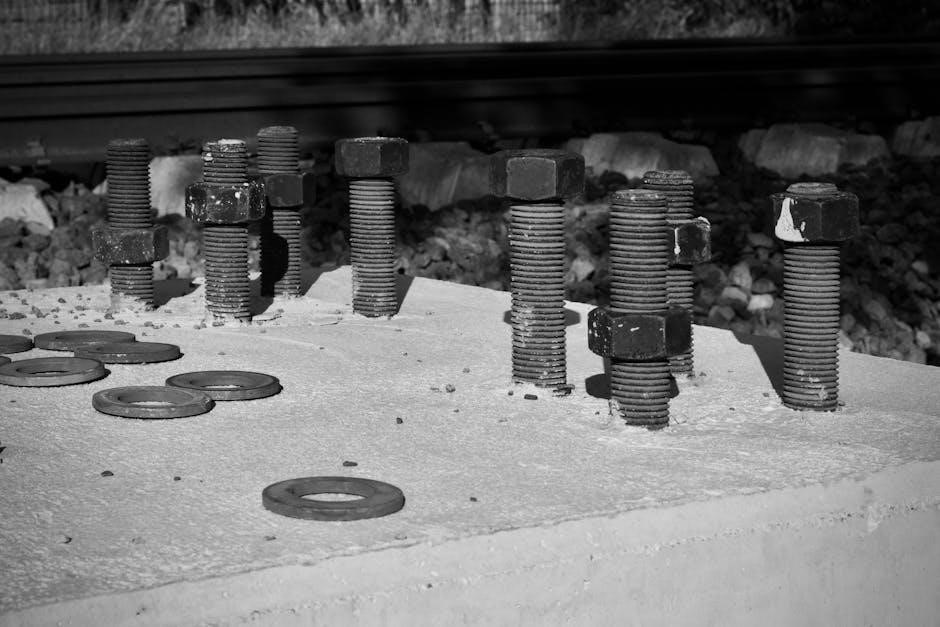
Bolt pitch refers to the distance between adjacent thread crests․ A standard bolt size chart PDF meticulously details this crucial measurement, expressed differently for US and metric fasteners․ For Unified Thread Standard (UTS) bolts, pitch is defined as threads per inch (TPI)․ A higher TPI indicates a finer thread․

Metric bolts, conversely, utilize pitch measured in millimeters (mm) – the distance between threads․ Understanding pitch is paramount for ensuring proper bolt engagement and preventing stripping․ A mismatched pitch renders a nut or tapped hole unusable․
When consulting a chart, note that coarser threads offer greater strength and faster assembly, while finer threads provide more precise adjustment and are less prone to loosening from vibration․ A comprehensive PDF will clearly delineate pitch values for various bolt sizes, aiding in selecting the optimal fastener for the application․ Accurate pitch identification is vital for compatibility and structural integrity․
Thread Count (TPI/Metric Pitch)
A standard bolt size chart PDF prominently features thread count, crucial for fastener compatibility․ For US standard bolts, this is expressed as Threads Per Inch (TPI)․ Higher TPI values signify finer threads, offering increased precision but potentially reduced strength․ Conversely, lower TPI values denote coarser threads, providing greater strength and faster assembly․
Metric bolts utilize a different system: pitch measured in millimeters (mm)․ This represents the distance between adjacent threads, not the count per inch․ Common metric pitches include 0․75mm, 1․0mm, 1;25mm, and 1․5mm․ A detailed chart will clearly list both TPI and metric pitch values for each bolt size․
Correctly identifying thread count/pitch is essential․ Mismatched threads prevent proper engagement, leading to stripped bolts or failed connections․ A reliable PDF resource will provide clear guidance, ensuring accurate selection and preventing costly errors in assembly and repair work․
US Standard Bolt Sizes (Fractional & Decimal)
A comprehensive standard bolt size chart PDF must detail US fastener dimensions․ Traditionally, US bolts are specified using fractional inch sizes (e․g․, ¼”, ⅜”, ½”)․ However, decimal equivalents are increasingly common, particularly in engineering and manufacturing contexts․ A useful chart will present both formats for ease of use․
Common sizes range from #0 (smallest) to #16 (largest) for machine screws, and ¼” to 1” or larger for bolts․ The PDF should clearly indicate the diameter and length for each size․ Understanding the relationship between fractional and decimal values is vital for accurate bolt selection and replacement․
Furthermore, the chart should correlate these sizes with corresponding thread counts (TPI)․ This allows users to identify the correct bolt for a specific application․ A well-organized PDF will streamline the process, minimizing errors and ensuring secure fastening․ Accurate conversion tables are key․
Common Fractional Bolt Sizes
A standard bolt sizes chart PDF focusing on fractional sizes should prioritize frequently used diameters․ These include ¼-20, 5/16-18, ⅜-16, ½-13, ⅝-11, ¾-10, and 1-8․ The numbers following the dash represent the threads per inch (TPI)․ These sizes are prevalent in automotive, construction, and general mechanical applications․
The PDF should list these sizes alongside their corresponding decimal equivalents (e․g․, ¼” = 0․250”)․ Providing a range of standard lengths for each diameter is also crucial – typically from ½” to several inches, in ¼” increments․ This allows users to quickly locate the appropriate bolt without extensive searching․
Clearly indicating the typical applications for each size enhances usability․ For example, ¼-20 bolts are common in automotive body panels, while ½-13 bolts are often used in structural steel connections․ A well-designed chart simplifies fastener identification and selection for various projects․
Decimal Equivalent Chart for Bolts
A crucial component of any standard bolt sizes chart PDF is a comprehensive decimal equivalent chart․ This bridges the gap between fractional and decimal measurements, essential for precise engineering and manufacturing․ The chart should list common fractional bolt diameters (e․g․, 1/8”, 1/4”, 3/8”, 1/2”, etc․) alongside their precise decimal counterparts (e․g․, 0․125”, 0․250”, 0․375”, 0․500”, etc․)․
Accuracy is paramount; the chart must provide decimal values to at least three decimal places (e․g․, 0․6250) to ensure compatibility with digital calipers and other measuring instruments․ Including a column for metric conversions (in millimeters) further enhances the chart’s utility․
Formatting for easy readability is key․ A tabular layout with clear headings and consistent spacing will allow users to quickly find the desired conversion․ This chart serves as a vital reference for anyone working with both inch and metric fastener systems, streamlining projects and minimizing errors․
Metric Bolt Sizes
A standard bolt sizes chart PDF must dedicate a significant section to metric fasteners, as they are globally prevalent․ Metric bolt sizes are designated by ‘M’ followed by a number indicating the nominal diameter in millimeters (e․g․, M3, M6, M10)․ This section should detail commonly used sizes, including M3, M4, M5, M6, M8, M10, and M12, outlining their typical applications․
Beyond diameter, pitch is critical․ The chart needs to specify the thread pitch (distance between threads) for each size, often expressed as 1․0mm, 1․25mm, or 1․5mm․ A clear explanation of coarse versus fine threads is essential, as it impacts strength and suitability for different materials․
Providing a table format with columns for diameter, pitch, and common head styles (hex, socket, etc․) enhances usability․ Including typical torque specifications for various grades of metric bolts adds significant value to the PDF chart․
Common Metric Bolt Sizes (M3, M4, M5, M6, M8, M10, M12)
A detailed standard bolt sizes chart PDF will showcase frequently used metric dimensions․ M3 bolts, with a 3mm diameter, are common in electronics and small assemblies․ M4 finds use in similar applications requiring slightly more strength․ M5 is prevalent in automotive and machinery, offering a good balance of size and holding power․
M6 bolts are extremely versatile, appearing in a wide range of applications from furniture to engine components․ Stepping up, M8 provides increased strength for heavier-duty tasks․ M10 is frequently used in structural applications and automotive chassis․ Finally, M12 bolts are employed in high-stress situations, like suspension systems and large machinery․
Each size should include typical length ranges and common head types (hex, socket, button)․ Specifying standard pitches (coarse – 1․0mm for many, fine – 1․25mm or smaller) alongside each diameter is crucial for accurate selection․
Metric Pitch Explained (Coarse vs․ Fine)
A comprehensive standard bolt sizes chart PDF must clarify metric pitch distinctions․ Metric pitch, measured in millimeters, defines the distance between threads․ Coarse pitch (e․g․, 1․0mm for M6) features fewer threads per millimeter, offering faster assembly and disassembly, and greater tolerance for debris․
Coarse threads are generally preferred for softer materials or applications where speed is paramount․ Conversely, fine pitch (e․g․, 1․25mm for M6) boasts more threads per millimeter, resulting in a stronger, more vibration-resistant connection․ Fine threads distribute clamping force over a larger area․

The choice between coarse and fine pitch depends on the application․ Fine pitch is ideal for applications subject to significant vibration or requiring high clamping force․ A detailed chart will clearly indicate standard pitches for each metric bolt size, aiding in correct fastener selection․ Understanding these differences is vital for ensuring joint integrity․
Bolt Length Measurement
A standard bolt sizes chart PDF must detail accurate length measurement techniques․ Bolt length is typically measured from under the bolt head to the tip of the threads․ It’s crucial to differentiate between overall length and usable thread length, as the unthreaded portion contributes to the overall dimension;
For partially threaded bolts, like carriage bolts, the chart should specify both the overall length and the thread length․ Accurate length selection is vital for ensuring proper clamping force and preventing interference with connected components․ Incorrect length can lead to joint failure or damage․
When referencing a bolt size chart, always confirm whether the listed length includes the head․ A clear illustration within the PDF demonstrating the measurement point is highly beneficial․ Precise length determination, coupled with correct diameter and pitch, guarantees a secure and reliable fastening solution․
Bolt Head Types & Dimensions
A comprehensive standard bolt sizes chart PDF must include detailed information on various bolt head types and their corresponding dimensions․ Common head styles like hex, socket cap, carriage, and flat heads each have unique characteristics impacting their application․
Hex head bolts are defined by their six-sided shape, with dimensions specified by the wrench or socket size required․ Socket head cap screws utilize an internal hexagonal drive, and charts should detail drive size and head height․ Carriage bolts feature a rounded head and square shoulder, requiring specific hole dimensions․
Flat head bolts are designed to sit flush with the surface, and the chart should indicate head diameter and countersink angle․ Providing clear diagrams illustrating each head type and key dimensions – like width across flats, height, and bearing surface – is essential for accurate selection and proper installation․ Accurate dimensions ensure compatibility and optimal performance․
Hex Head Bolts
Hex head bolts, a staple in many assemblies, require precise dimensional data within a standard bolt sizes chart PDF․ These bolts are characterized by their six-sided heads, allowing for tightening with a standard wrench or socket․ A complete chart will detail the “width across flats” (WAF) dimension, crucial for selecting the correct tool․
Charts should categorize hex bolts by diameter and thread pitch, clearly indicating the corresponding WAF for each size․ For example, an M10 bolt with a 1․5mm pitch will have a specific WAF․ Furthermore, the chart should specify standard head heights for different lengths, ensuring proper clearance and functionality․
Information on material grade is also vital, as it impacts the bolt’s strength and suitability for various applications․ Including standardized markings (like SAE grade markings) alongside the dimensional data enhances the chart’s usability․ A well-structured hex head bolt section within the PDF simplifies fastener identification and selection for professionals and DIY enthusiasts alike․
Socket Head Cap Screws
Socket head cap screws (SHCS) are frequently referenced in standard bolt sizes chart PDFs due to their precision and widespread use․ Unlike hex bolts, SHCS utilize an internal hexagonal drive, requiring an Allen wrench or hex key for installation․ A comprehensive chart must detail drive sizes corresponding to each screw diameter․
Crucially, the chart should specify the screw’s head height and diameter, as these dimensions impact clearance and aesthetic considerations․ Standard sizes, like M3, M4, M5, M6, M8, and M10, should be prominently featured, with clear indication of their respective drive sizes (e․g․, 2․5mm, 3mm, 4mm)․
Thread pitch and length are also essential parameters․ A detailed PDF will differentiate between coarse and fine threads for each diameter․ Furthermore, material grade information (e․g․, Class 8․8, Class 12․9) should be included, alongside relevant strength markings․ This ensures users can select the appropriate SHCS for their specific load-bearing requirements, enhancing safety and reliability․
Carriage Bolts
Carriage bolts, a staple in many construction and woodworking projects, require specific detailing within a standard bolt sizes chart PDF․ Their unique design – a rounded head and square shoulder – necessitates inclusion of shoulder width measurements alongside diameter and length․ This shoulder ensures a flush fit against the material being fastened, preventing rotation․
A comprehensive chart will list common carriage bolt diameters, typically ranging from ¼ inch to ¾ inch, alongside their corresponding thread counts (TPI) or metric pitch․ Head diameter and height are also critical dimensions for proper washer and nut selection․
Material specifications are vital; charts should indicate common materials like steel (often zinc-plated for corrosion resistance) and stainless steel․ Furthermore, referencing ANSI standards for carriage bolt dimensions ensures accuracy and interchangeability․ Including a visual representation alongside the numerical data enhances usability, allowing users to quickly identify the correct carriage bolt for their application, improving project efficiency and structural integrity․
Flat Head Bolts
Flat head bolts, designed to sit flush with the mounting surface, demand precise dimensional data within a standard bolt sizes chart PDF․ Unlike other bolt types, the head’s angle (typically 82 or 90 degrees) and diameter are crucial for achieving a clean, finished appearance and secure fastening․
A detailed chart must include not only the bolt’s diameter and length, but also the head diameter, head height, and the specific head angle․ This is particularly important when countersinking holes to accommodate the bolt head․ Common diameters range from #6 to ½ inch, with corresponding thread pitches clearly indicated․
Material grades and finishes are also essential details․ Charts should specify available materials like steel, stainless steel, and brass, along with common finishes like zinc plating or black oxide․ Including information on compatible washers – flat, lock, or conical – further enhances the chart’s utility․ Accurate representation of these dimensions ensures proper fit and prevents damage to surrounding materials, contributing to a professional and structurally sound result․
Bolt Grade & Strength Markings
A comprehensive standard bolt sizes chart PDF must clearly delineate bolt grade and strength markings․ These markings, often found on the bolt head, indicate the material’s tensile strength and are critical for selecting the appropriate fastener for a given application․
For US bolts, markings like Grade 2, Grade 5, and Grade 8 are common․ Grade 2 represents lower tensile strength, suitable for less demanding applications, while Grade 8 signifies high strength, ideal for critical joints․ Metric bolts utilize a numbering system (e․g․, 4․8, 8․8, 12․9) where the first two digits indicate tensile strength (in MPa x 100) and the second two represent yield strength․
The chart should visually represent these markings and their corresponding strength values․ Including information on how to interpret these markings – radial lines, dots, or embossed numbers – is essential․ Understanding bolt grade ensures structural integrity and prevents failures due to overloading․ A well-defined section on strength markings empowers users to make informed decisions, enhancing safety and reliability․
Converting Between US and Metric Bolt Sizes
A practical standard bolt sizes chart PDF necessitates a clear conversion section between US customary and metric measurements․ Direct equivalence isn’t always possible, as bolt sizing systems differ fundamentally․ The chart should provide approximate conversions for bolt diameters, commonly referencing fractional inches to millimeters․
For example, a ¼ inch bolt roughly equates to a 6mm bolt, while a ⅜ inch bolt is close to 8mm․ However, thread pitch presents a more complex conversion․ US threads are measured in Threads Per Inch (TPI), while metric uses pitch in millimeters․ The chart should offer tables illustrating common TPI values and their corresponding metric pitch equivalents․
Highlighting the inherent approximations is crucial․ Users should understand that conversions are guidelines, and precise matching requires considering thread compatibility․ Including a disclaimer emphasizing the importance of verifying thread fit before assembly is vital for preventing damage and ensuring proper functionality․ This conversion section enhances the chart’s usability for international projects or mixed fastener environments;
Where to Find Standard Bolt Size Charts (PDF Downloads)
Locating a reliable standard bolt sizes chart PDF is straightforward with numerous online resources․ Many fastener manufacturers and engineering websites offer downloadable charts covering US and metric standards․ Websites like Machinery’s Handbook often provide comprehensive fastener data, sometimes available as PDFs with a subscription or purchase․
Industrial supply companies, such as McMaster-Carr and Grainger, frequently host detailed bolt size charts in PDF format on their websites․ These charts are often application-specific, catering to industries like automotive, aerospace, or construction․ Government agencies and standards organizations (like ANSI and ISO) also publish official fastener specifications, occasionally in downloadable PDF form․
A quick web search for “standard bolt size chart PDF” yields a plethora of results․ However, verifying the source’s credibility is crucial to ensure accuracy․ Prioritize charts from reputable manufacturers or established engineering resources․ Always cross-reference information from multiple sources to confirm data validity before relying on a specific chart for critical applications․
Using Bolt Size Charts for Specific Applications
Applying bolt size charts effectively requires understanding the application’s demands․ Automotive repairs often necessitate specific bolt grades and sizes, detailed in vehicle-specific charts․ Construction projects demand charts accounting for structural loads and material compatibility, frequently referencing ANSI standards․
When working with machinery, consult charts detailing replacement parts and maintenance requirements․ Aerospace applications demand extremely precise fastener specifications, often requiring charts adhering to stringent industry regulations․ Always consider the material being fastened – wood, metal, or plastic – as this influences the appropriate bolt size and type․
Proper chart usage involves identifying the required strength, thread type (coarse or fine), and length․ Cross-referencing with material specifications and load calculations ensures a secure and reliable connection․ Ignoring these factors can lead to fastener failure, compromising safety and structural integrity․ Utilizing a PDF chart allows for easy printing and on-site reference․
Resources for Fastener Information
Numerous online and offline resources provide detailed fastener information and downloadable bolt size charts in PDF format․ Websites like Machinery’s Handbook offer comprehensive data on fastener standards, dimensions, and materials․ Fastener manufacturers, such as McMaster-Carr and Grainger, provide extensive catalogs and technical specifications accessible online․
Industry organizations like the Industrial Fasteners Institute (IFI) offer valuable resources, including standards documents and training materials․ ANSI (American National Standards Institute) publishes crucial standards related to fastener specifications and testing procedures․ Several specialized websites focus on metric and standard bolt sizes, offering interactive charts and conversion tools․
For offline access, consider purchasing a fastener reference guide or a comprehensive engineering handbook․ Local hardware stores and fastener suppliers can also provide assistance and access to relevant charts․ Remember to verify the source’s credibility and ensure the information aligns with your specific application requirements when utilizing these resources․
Frequently Asked Questions (FAQs) about Bolt Sizes
Q: What’s the difference between a bolt and a screw? A: Bolts typically use a nut, while screws thread directly into a material․ Q: Why are there both inch and metric bolt sizes? A: Historical reasons and differing manufacturing standards led to both systems․ Conversion charts are essential․

Q: How do I determine the correct bolt length? A: Measure the materials being fastened, add the nut and washer thicknesses, and account for thread engagement․ Q: What does “bolt grade” mean? A: It indicates the bolt’s tensile strength; higher grades are stronger․ Markings on the bolt head identify the grade․
Q: Where can I find a reliable bolt size chart PDF? A: Reputable fastener manufacturers and engineering resource websites offer downloadable charts․ Q: What is thread pitch? A: It’s the distance between threads; coarser pitches are stronger but require more torque․ Understanding pitch is crucial for proper fastening․ Always double-check compatibility!